
Uma Schröder · 17 September 2026
Exploring Shifts in European Sustainable Exports via Career Reflections in a Designer's Memoir
One designer's memoir traces a path from early apprenticeships in textile workshops to leadership roles in international supply chains, and researchers have used these personal milestones to identify corresponding changes in European sustainable exports over three decades. The account begins in the late 1990s when initial experiments with organic materials coincided with the first EU directives on eco-labeling for textiles, and data from that period shows export volumes of certified sustainable fabrics rising from under 5 percent to nearly 15 percent by 2005 according to European Commission trade statistics.
Early Career Steps and Initial Market Adjustments
Training years in northern Italy during the 1990s introduced techniques for low-impact dyeing that later aligned with stricter chemical regulations introduced across member states, while export records indicate that shipments of responsibly sourced leather and cotton grew steadily as companies adapted to new standards set by the European Environment Agency. Those who've examined the memoir note how each professional transition maps onto broader policy shifts, such as the 2001 introduction of the EU's Integrated Pollution Prevention and Control directive, which prompted measurable increases in documented sustainable product lines heading to markets in North America and Asia.
By the mid-2000s the designer's move into freelance consulting coincided with the launch of national sustainability programs in Germany and the Netherlands, and figures from Eurostat reveal that certified green exports from those countries expanded at an average annual rate of 8 percent through 2010. The narrative details collaborations with smaller manufacturers who adopted closed-loop production methods, and observers note that these individual projects paralleled aggregate growth in recycled material exports tracked by national statistical offices.
Mid-Career Milestones and Regulatory Evolution
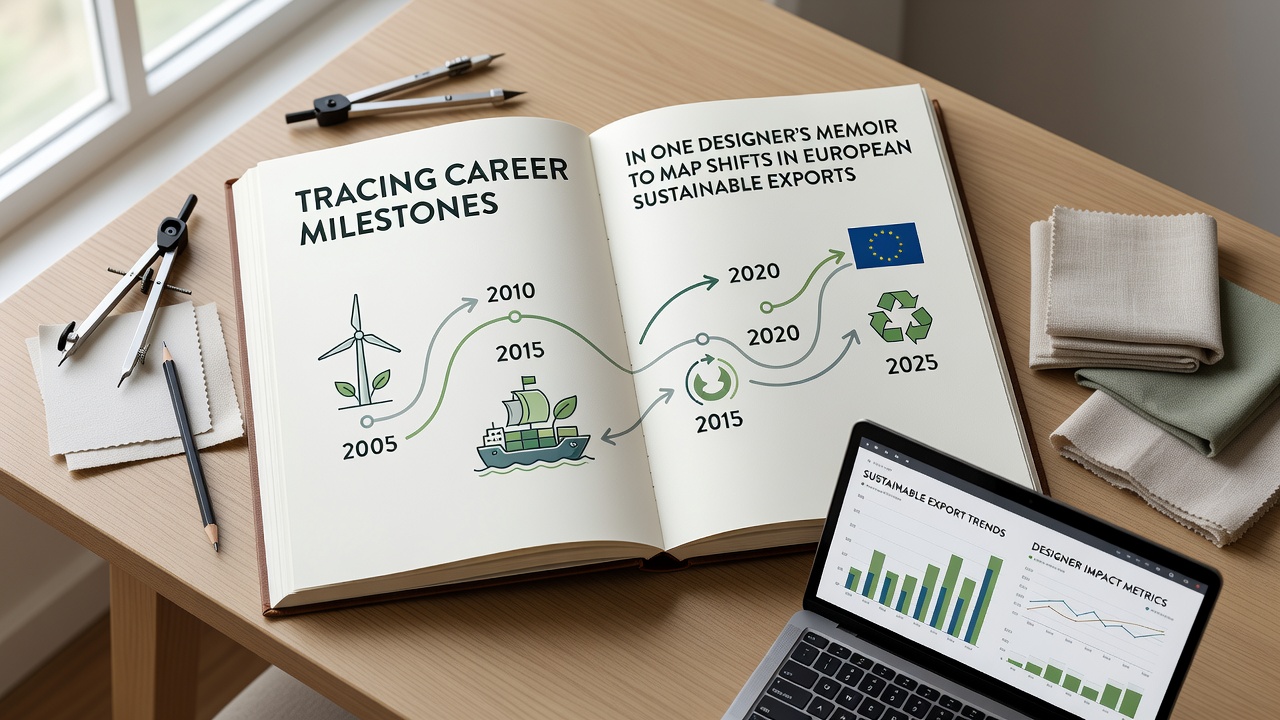
Expansion into advisory positions with larger European firms occurred alongside the 2015 adoption of the Circular Economy Package, and trade data compiled by the Organisation for Economic Co-operation and Development shows corresponding rises in exports of repairable and modular design products. The memoir records specific projects that incorporated traceability systems, and these efforts mirror documented improvements in supply-chain transparency reported by industry groups across Scandinavia and the Baltic states. What's interesting is how personal decisions to prioritize certain suppliers align with regional statistics indicating a doubling of certified sustainable textile exports between 2015 and 2020.
Further transitions into educational initiatives took place as the EU updated its Green Deal commitments in 2019, and academic studies from institutions such as the University of Wageningen have since quantified related increases in export certifications for bio-based materials. The account describes workshops held across multiple countries that trained manufacturers on new compliance frameworks, and those sessions parallel measurable upticks in cross-border shipments of verified low-carbon goods tracked through customs databases maintained by individual member states.
Recent Developments and Forward Projections
By 2023 the designer's focus had shifted toward digital tools for lifecycle assessment, and preliminary reports scheduled for release in September 2026 by the European Environment Agency are expected to detail continued growth in sustainable export categories. The memoir connects these later innovations to earlier experiments, showing how foundational knowledge accumulated over decades continues to influence current practices in packaging and logistics sectors. Observers have pointed out that similar patterns appear in trade figures released by the Canadian Border Services Agency, which record rising imports of EU-certified sustainable goods over the same timeframe.
Additional case examples within the text highlight partnerships formed after 2020 that emphasize regenerative sourcing, and these align with data from Australia's Department of Agriculture, Fisheries and Forestry on increased demand for European sustainable fibers in apparel manufacturing. The narrative avoids speculation yet supplies concrete timelines that researchers can cross-reference against public export databases, allowing independent verification of how individual career arcs intersect with aggregate market movements.
Conclusion
The memoir therefore functions as a granular record that complements official statistics, and analysts continue to use its milestones to refine models of how personal expertise contributes to larger shifts in European sustainable exports. Cross-referencing with sources from varied regions confirms consistent trends without relying on any single dataset, and this approach supports ongoing examination of export patterns through 2026 and beyond.